
An estimated 3.1 million South Africans aged 15 and older did volunteer work in 2024, lifting the national volunteer rate to 6.9% from 5.8% a decade earlier, according to Statistics South Africa’s Volunteer Activities Survey. The core news event is a measurable rise in participation in unpaid, non-compulsory work, alongside a shift toward more structured, organisation-based volunteering (42.8% of volunteers in 2024 versus 27.5% in 2014). At the same time, total annual volunteer hours fell sharply to 449.5 million hours from 610.5 million in 2014, meaning more people are helping, but for fewer hours overall.
For households, the immediate “direct cost” is largely time and transport rather than a new bill—volunteering typically requires taxi fare, data/airtime for coordination, and time that could otherwise be used for paid work or job-search activities. Where volunteering substitutes for paid services (child-minding, caregiving for the elderly, community clean-ups, school support, meal preparation), it can reduce out-of-pocket spending for families receiving help, but it can also increase pressure on low-income volunteers who must cover the practical costs of showing up while remaining unpaid. The survey’s estimate that 2024 volunteering equated to about 216,000 full-time jobs (down from 293,000 in 2014) highlights that the “labour” being provided free is still economically meaningful—even as the volume of hours has contracted.
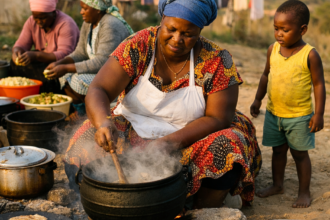
The survey also signals how cost-of-living stress is shaping volunteer dynamics. Food has become the dominant form of compensation, reported by 86.5% of volunteers in 2024, a major shift away from money being the most common expectation in 2014. This matters to the layperson because it suggests some volunteering is intertwined with community survival strategies: soup kitchens, church or funeral support, community care, and other social services that help households bridge food gaps. It is notable, too, that discouraged work-seekers and unemployed people showed high volunteer rates (10.1% and 9.6% respectively), which can reflect both the search for networks and experience and the need to stay connected to community support systems when formal income is absent.
For the broader economy, organisation-based volunteering is rising, which generally improves coordination and accountability, but the decline in total hours may limit the scale of services communities can rely on, particularly in community and social services where most volunteer time is concentrated. The estimated monetary value of volunteering rose to R17.5 billion in 2024, indicating that even fewer hours can carry higher “replacement value” as skills and wage benchmarks shift—technicians, sales workers and elementary occupations contributed the largest shares of value. Practically, South Africans are likely to feel the impact where volunteer capacity plugs gaps in care and community services: more organised programmes may exist, but each programme may have fewer volunteer-hours available, potentially lengthening waiting times for assistance or increasing the load on already-stretched households.